
Quick answer
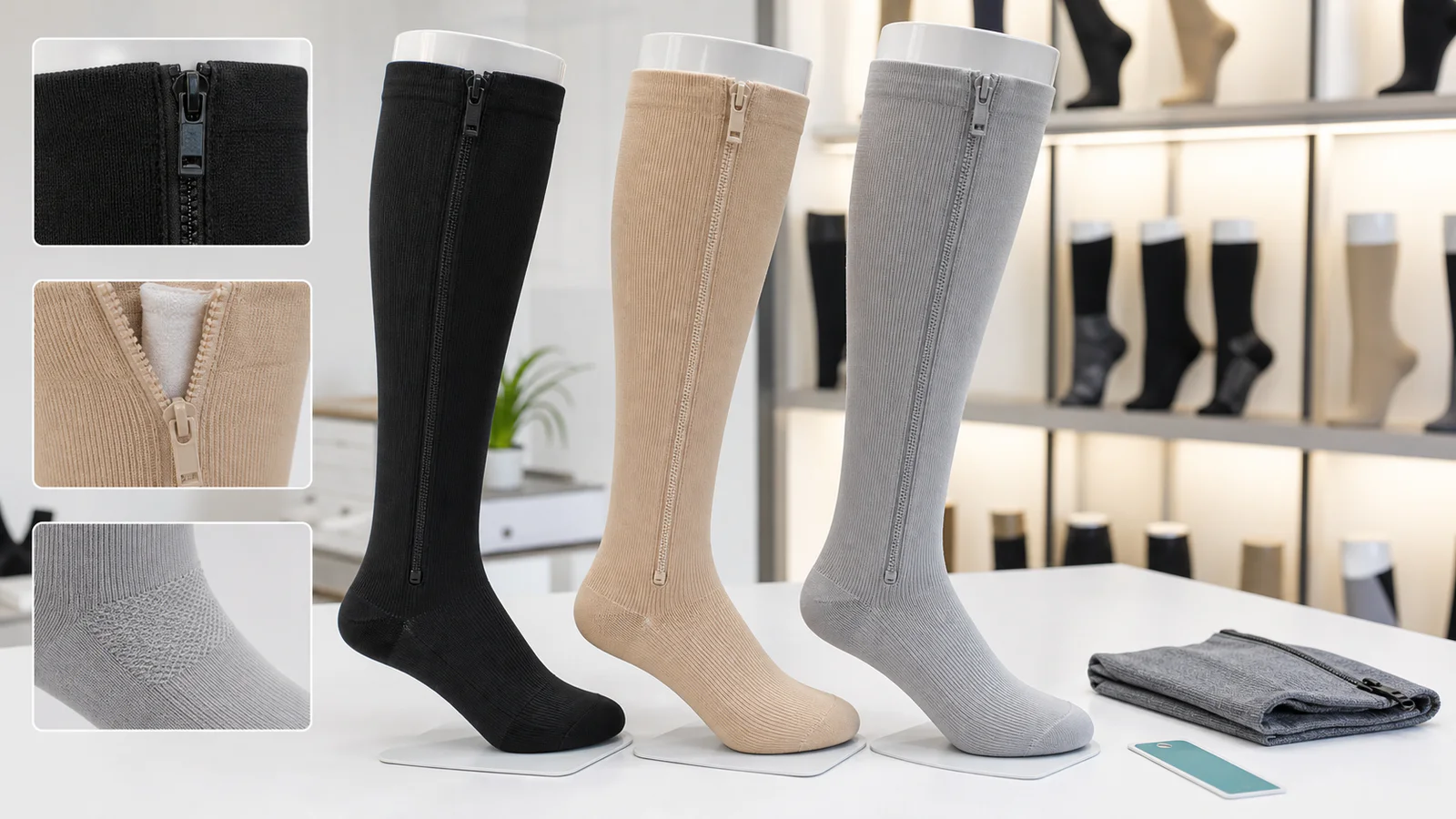
Zipper compression socks add an opening mechanism to a knee-high support product. They can make the product direction more approachable for some customers, but the zipper, guard, seam, and surrounding knit must be tested carefully so the sock remains comfortable, secure, and durable.
A zipper is a functional component, not only a visual feature. It changes pattern engineering, seam bulk, application, durability testing, and packaging instructions. Buyers should evaluate the complete sock rather than assuming every zipper construction works the same way.
Core design decisions
| Component | Buyer decision | Sample check |
|---|---|---|
| Zipper position | Inside, outside, or other approved placement | Comfort, access, and footwear interaction |
| Slider and pull | Size, grip, finish, and locking behavior | Easy operation without sharp edges |
| Inner guard | Coverage between zipper and skin | Pinching, rubbing, folding, and full-length protection |
| Top and bottom stops | Secure construction and clean finishing | Repeated opening and closing |
| Knit around zipper | Stability and pressure transition | Distortion, gaps, and seam stress |
Ease of use needs real testing
A zipper may help create a wider opening during application, but it does not automatically make every compression product easy for every wearer. Test how users align the heel, hold the fabric, close the zipper, and avoid catching skin or the guard.
Instructions should use clear images and a realistic sequence. If the user must first position the sock in a particular way, explain it on the insert and online listing.
Fit and regular-calf size grading
The closed zipper defines part of the leg shape, so grading must be checked across every size. Review ankle fit, calf fit, leg length, zipper length, top position, and heel alignment. Do not use one zipper length across sizes unless sample testing supports it.
Durability and comfort checks
- Repeated zipper cycling before and after washing.
- Slider retention and stop security.
- Inner-guard coverage throughout movement.
- Seam strength and knit distortion beside the zipper.
- Corrosion, color change, or surface damage under the care method.
- Skin comfort during sitting, walking, and footwear use.
Packaging and customer expectations
Show the zipper clearly and explain its purpose without promising universal ease. Include opening, wearing, closing, removal, and care instructions. Product photography should display the guard and the fully closed position, not only a lifestyle image.
Private-label options
Buyers can discuss solid colors, regular-fit size ranges, open- or closed-toe directions, logo placement, zipper finishes, instruction cards, and retail packaging. Component availability, quantity, and testing needs should be confirmed early because they influence cost and development timing.
Buyer takeaway
A good zipper compression sock is a complete engineered product. Approve the zipper, guard, knit, fit, instructions, and wash performance together, and test every size before relying on the feature in marketing.
Frequently asked questions
Are zipper compression socks easier to put on?
A zipper can create a wider opening and may help some users, but ease depends on the full construction, fit, user ability, and wearing method. Test the actual sample with the target audience.
What should buyers inspect on the zipper?
Check the slider, pull, stops, guard, seams, alignment, repeated operation, wash performance, skin comfort, and knit stability around the zipper.
Can zipper compression socks use custom packaging?
Yes. Private-label projects can include branded boxes or bands, size charts, wearing instructions, care information, and barcode labels.