
Quick answer
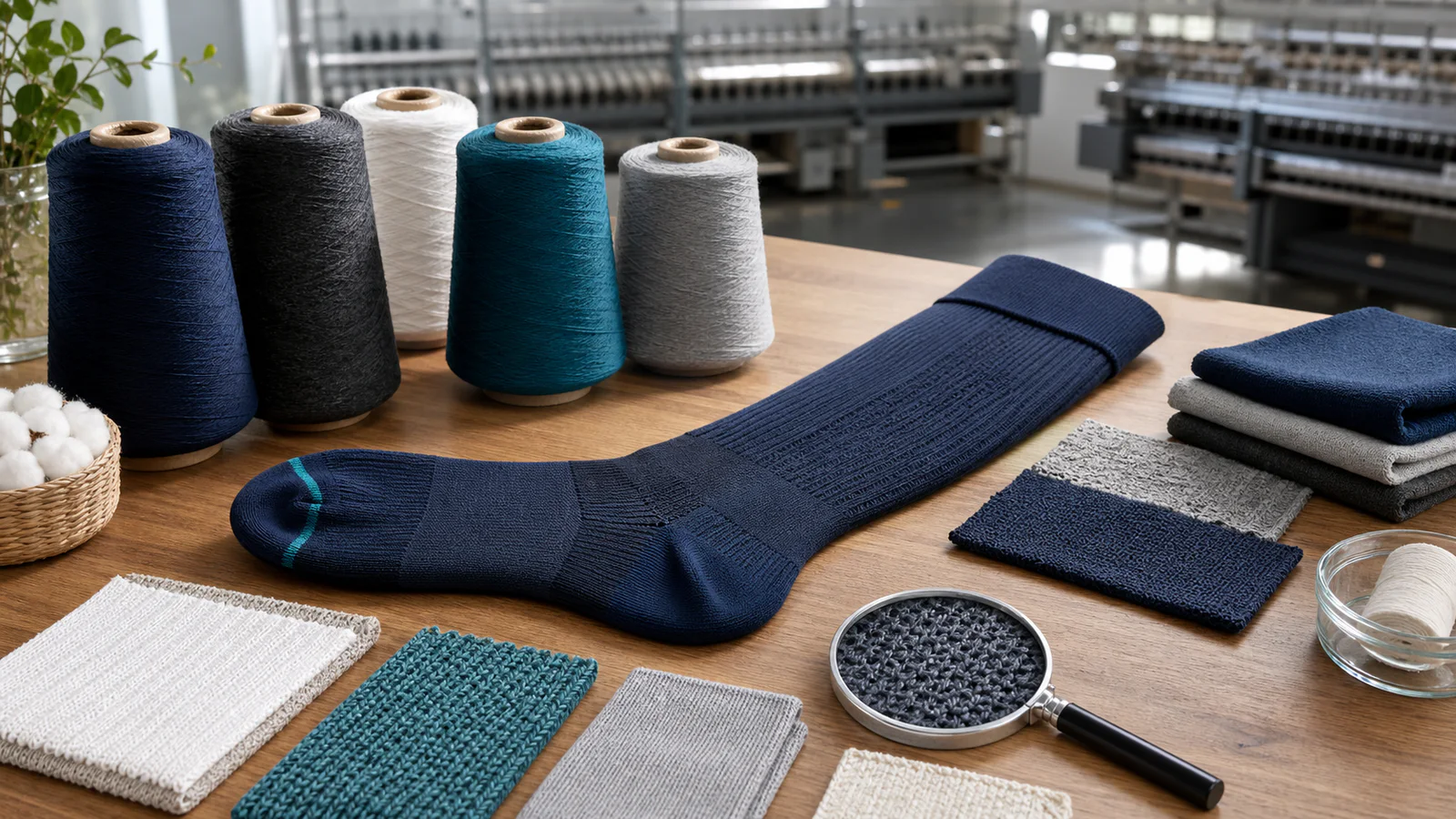
Most compression socks use a blend rather than one fiber. Our in-stock compression sock specification is 65% nylon, 30% polyester, and 5% spandex. We identify nylon and polyester separately because they are different fiber families. Custom programs can also use bamboo-derived viscose, merino wool, COOLMAX performance yarn, cotton blends, and other functional yarn directions.
Material selection affects how a compression sock feels, stretches, dries, holds color, and performs after washing. A fiber-content line on a package is useful, but it does not tell the whole story. Yarn quality, denier, knitting structure, finishing, and size grading also shape the final product.
Common fiber roles
| Fiber direction | Common product role | Buyer review points |
|---|---|---|
| Nylon | Smooth main yarn with strength and abrasion resistance | Hand feel, sheen, color, durability, and cost |
| Polyester | Durable, color-friendly main yarn with practical moisture handling | Softness, pilling, drying, and visual finish |
| Spandex or elastane | Stretch, recovery, and compression structure | Recovery after wear and washing, coverage, and fit consistency |
| Cotton blend | Familiar natural-fiber touch and casual styling | Drying time, bulk, shrinkage, elasticity, and abrasion |
Nylon and polyester are not interchangeable
Nylon is a polyamide fiber, while polyester is a different synthetic fiber family. They can look and feel similar in some finished socks, but they differ in hand feel, moisture behavior, dyeing, abrasion performance, pilling risk, and cost. Some market listings use the two material names loosely or interchangeably. B2B buyers should request a written composition that identifies both fibers and their percentages instead of accepting a vague material name.
- Ask for nylon and polyester percentages as separate specification lines.
- Match the approved sample, bulk order, packaging label, and product listing to the same composition.
- Request supporting testing or documentation when fiber content is a key product claim in the target market.
Our in-stock compression sock composition
Our current in-stock compression socks are specified as 65.00% nylon, 30.00% polyester, and 5.00% spandex. This 65/30/5 blend is disclosed as three separate components so buyers can build accurate product pages, packaging, and comparison sheets.
| Fiber | Stock percentage | Primary role |
|---|---|---|
| Nylon | 65.00% | Main body yarn, smooth touch, and abrasion resistance |
| Polyester | 30.00% | Color performance, durability, and practical moisture handling |
| Spandex | 5.00% | Stretch, recovery, and support for the knitted compression structure |
Final labeling and sales claims should follow the approved order specification and any fiber-content requirements in the buyer's target market.
Nylon blend compression socks
Nylon is widely used when buyers want a smooth surface, good strength, and a refined appearance. It can support thin everyday socks, medical-style solids, and performance constructions. Different nylon yarns can produce noticeably different textures, so buyers should approve the actual sample rather than specifying only a percentage.
Polyester blend compression socks
Polyester can be practical for colorful patterns, sport styling, and value-oriented multi-packs. It generally handles color well and can support faster-drying product directions. Buyers should still evaluate softness, pilling, odor management, and appearance after repeated washing.
Why spandex content is not the complete compression specification
Spandex provides elasticity, but a higher percentage does not by itself prove a specific pressure range or a better product. Compression behavior depends on how elastic yarn is covered, fed, knitted, and sized. The finished sock and its approved test method are more meaningful than a fiber percentage alone.
Where cotton blends fit
Cotton blends can make a compression product feel more familiar to everyday sock customers. They may suit casual workwear, lifestyle, and cooler-weather programs. The development team must balance cotton content with elastic recovery, drying, thickness, shrinkage, and the target pressure direction.
Custom bamboo, merino wool, and COOLMAX yarn options
Private-label programs are not limited to the in-stock 65/30/5 blend. We can discuss bamboo-derived viscose for a soft hand feel, merino wool for temperature-regulating premium directions, COOLMAX performance yarn for moisture-management products, and other functional blends. Custom feasibility depends on yarn availability, MOQ, color, compression construction, target price, care requirements, and sample testing.
Match material to channel
- Travel: lightweight feel, easy care, and compact packing.
- Nurses and work: durability, breathable construction, and wash performance.
- Sport: moisture management, secure fit, and abrasion resistance.
- Everyday retail: soft touch, approachable styling, and broad color options.
- Premium private label: refined hand feel, consistent dyeing, and stronger presentation.
Sample tests buyers should request
Compare hand feel before and after washing, dimensional change, pilling, color transfer, cuff recovery, heel and toe abrasion, and drying behavior. Keep a sealed approval sample and a signed specification so the bulk order is judged against the same reference.
Buyer takeaway
Choose a yarn blend by the full product goal, not by a fashionable fiber name. The best material direction is the one that balances feel, compression construction, durability, care, visual style, target price, and repeat-order consistency.
Frequently asked questions
What is the best material for compression socks?
There is no single best fiber. Our in-stock compression sock specification is 65% nylon, 30% polyester, and 5% spandex, with each fiber identified separately. The right custom blend depends on the channel and product target.
Does more spandex mean stronger compression?
Not necessarily. Finished compression depends on yarn, knitting structure, dimensions, and test results, not only the spandex percentage.
Can private-label compression socks use custom yarn blends?
Yes. Custom material directions can include bamboo-derived viscose, merino wool, COOLMAX performance yarn, cotton blends, and other functional yarns, subject to pressure range, quantity, target cost, yarn availability, and production testing.