
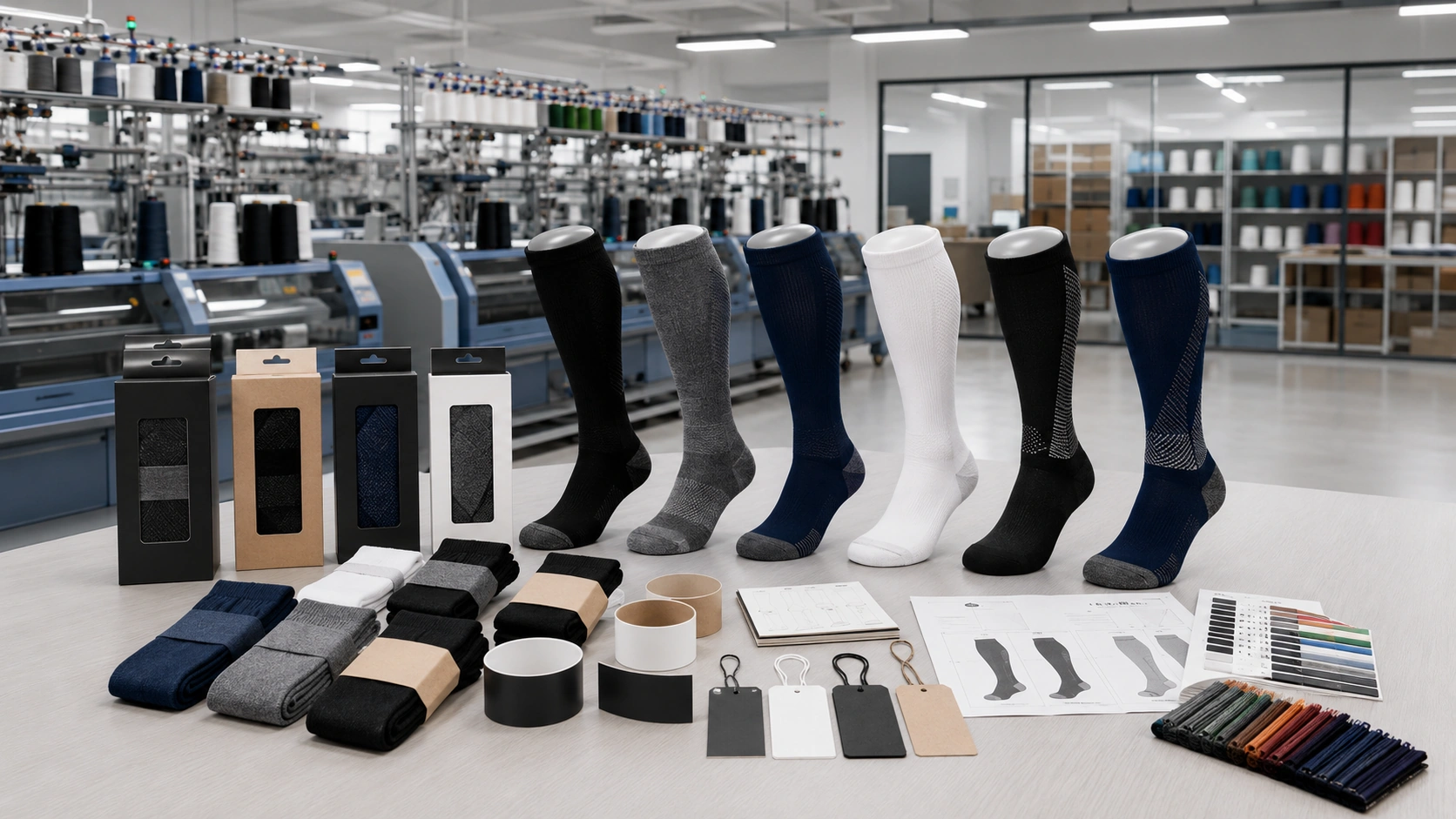
Compression socks are a practical product category for private-label brands because they can serve many markets: travel, nursing, standing work, wellness, sports recovery, pregnancy, office comfort, and senior care. But because fit and comfort are important, the product development process should be structured carefully.
The goal is to give the manufacturer a clear direction before sampling. This saves time, lowers communication risk, and helps the final product feel consistent with the brand.
Define the product position first
Before choosing colors or packaging, decide what type of buyer the product should attract. A premium travel sock, a value multi-pack, a nurse-focused work sock, and a medical supply channel sock should not use the same product brief. Each one needs different benefits, packaging language, and fit priorities.
- Retail brand: focus on shelf presentation and clear benefits.
- Amazon seller: focus on images, reviews, sizing, and repeat purchase.
- Distributor: focus on practical SKUs, consistent supply, and carton planning.
- Medical supply channel: focus on clarity, accuracy, and conservative presentation.
Prepare logo and brand placement rules
Logo placement on compression socks is usually discussed around the cuff, calf area, toe area, paper band, hang tag, box, or instruction card. The best option depends on the sock structure and how visible the brand should be when worn or photographed.
Send your logo in a clear file format and include color requirements. If you need a woven logo or knitted mark, keep details simple enough to reproduce cleanly on textile surfaces. Small thin lines, gradients, and complex icons may not translate well.
Choose colors with production and retail in mind
Color decisions should balance brand identity with production practicality. Black, white, grey, navy, beige, and medical-friendly neutrals are common for broad retail. Brighter colors can work well for sports, lifestyle, and online multi-packs. Patterned socks can make listings more attractive, but they may require more careful sample review.
If your project needs exact brand colors, prepare Pantone references or physical samples. For multi-color programs, confirm how many colors are included in each SKU and whether the order quantity supports the assortment.
Confirm compression range and size chart
Compression range is one of the most important product decisions. Our in-stock programs are 10-20 mmHg, and 20-30 mmHg can be developed as a custom order for suitable projects. Buyers should avoid vague claims and make sure the product copy matches the intended use.
Size chart development deserves early attention. Shoe size alone may not be enough. Many buyers should include calf circumference, ankle circumference, and sometimes leg length. A clear size chart can reduce returns, improve reviews, and help customer service answer questions.
Plan packaging as part of the product
Packaging is not an afterthought. For compression socks, packaging often needs to explain size, compression range, material direction, care instructions, use case, and comfort features. Common packaging options include paper bands, printed boxes, pouches, inserts, and multi-pair sets.
- Paper band: efficient for simple retail and wholesale programs.
- Box: stronger shelf presence and gift-set potential.
- Pouch: useful for travel or premium lifestyle positioning.
- Insert card: helpful for wearing tips, sizing, and care instructions.
Prepare compliant and realistic product copy
Product copy should be attractive but not careless. Focus on support, comfort, fit, breathability, stay-up cuff, reinforced heel and toe, daily wear, travel, work, and recovery positioning where appropriate. Avoid making unsupported medical treatment claims unless your team has the necessary documentation for the target market.
For online sales, prepare short bullet points, long descriptions, image text, size guidance, and FAQ content. For distributors, prepare a simple sell sheet with specifications and packaging details.
Use sampling to lock the final details
During sampling, review the sock on a real foot or leg whenever possible. Check cuff pressure, heel fit, toe comfort, color, logo clarity, packaging alignment, and whether the product looks good in photos. Keep sample feedback organized by product area so the factory can adjust efficiently.
A private-label compression sock project becomes smoother when the buyer treats product, packaging, and content as one system. Clear preparation helps the supplier build the right sample, and it gives the sales team stronger materials after production.