
Quick answer
Good compression sock packaging must identify the product quickly and help the customer select and use it correctly. Prioritize pressure range, size chart, material, care, quantity, seller information, instructions, barcode, and market-specific labeling before decorative claims.
Packaging is part of the product system. It affects shelf visibility, online unboxing, returns, warehouse handling, and the accuracy of product information. Buyers should approve packaging at the same discipline level as the sock itself.
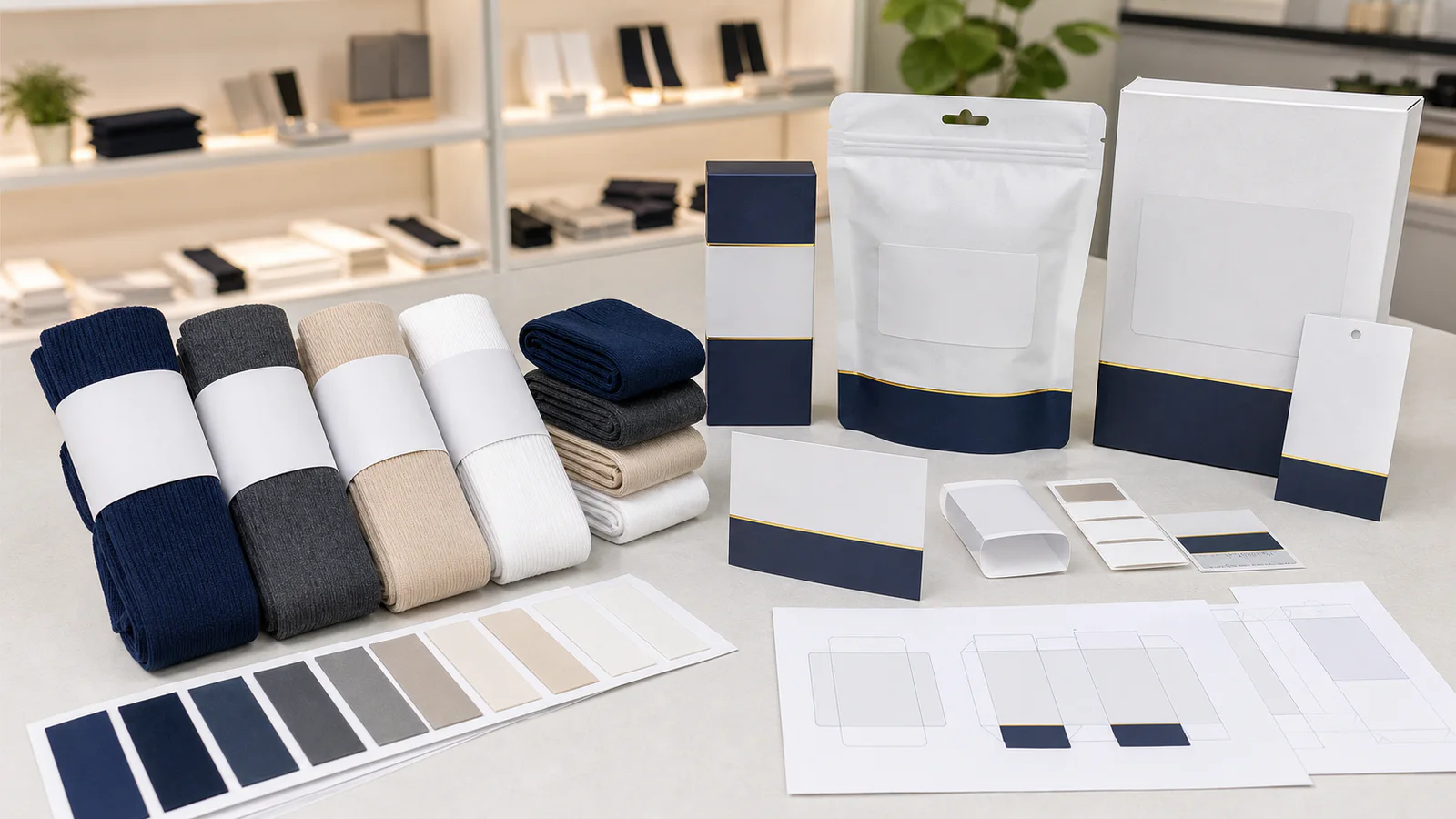
Choose the format by channel
| Format | Useful for | Buyer considerations |
|---|---|---|
| Paper band | Simple single-pair retail and lower material use | Limited space for size and instructions |
| Color box | Premium shelves, pharmacies, gifts, and detailed information | Artwork, board strength, assembly, and shipping volume |
| Pouch | Travel, reusable presentation, and online bundles | Closure, print durability, warning needs, and cost |
| Multi-pack box or bag | Marketplace value sets and repeat-purchase programs | Pack count, color assortment, SKU control, and returns |
Put selection information first
The customer should be able to identify sock height, pressure range, size, color, and pair count without searching through small text. Use a leg measurement chart where relevant and keep the same sizing logic on the product page.
Essential packaging content
- Product name, sock height, and labeled compression range.
- Size and clear measurement chart.
- Fiber content and care instructions.
- Pair count, color, and SKU or barcode.
- Manufacturer, distributor, or responsible seller information as required.
- Country of origin and required market language.
- Use instructions, warnings, and claims appropriate to the intended positioning.
Control claims before design approval
Words and images can change how a product is regulated. Avoid unsupported treatment, prevention, or performance claims. Before printing, the brand should review intended use, target market, product classification, required directions, warnings, and evidence with qualified compliance support.
For the United States, FDA explains that device-labeling requirements are contained in 21 CFR Part 801 and that false or misleading statements can cause a product to be misbranded. The applicable route depends on the product and its intended use, so a generic competitor package is not a compliance template.
Build an artwork control checklist
Assign version numbers to dielines, size charts, barcode files, translations, inserts, and carton marks. Proofread printed samples against the approved source file. Check barcode scanning and size-SKU matching before mass printing.
Design for fulfillment and shipping
E-commerce packaging should survive handling without creating unnecessary dimensional weight. Confirm retail pack dimensions, inner pack quantity, master carton count, carton labels, and whether the packaging needs tamper evidence or a poly bag for fulfillment.
Buyer takeaway
The best package is not the one with the most claims. It is the one that helps customers choose the correct product, meets channel requirements, stays accurate across SKUs, and reaches the customer in good condition.
Frequently asked questions
What information belongs on compression sock packaging?
Include product identity, pressure range, size and measurement chart, fiber content, care, pair count, SKU or barcode, seller information, origin, and any required instructions or warnings.
Which packaging format is best for online sales?
Multi-pack boxes, pouches, or compact bands can all work. Choose based on product price, information space, fulfillment protection, shipping volume, and customer experience.
Can a brand copy medical claims from a competitor's package?
No. Claims and labeling should be based on the brand's own intended use, product evidence, and target-market requirements.