
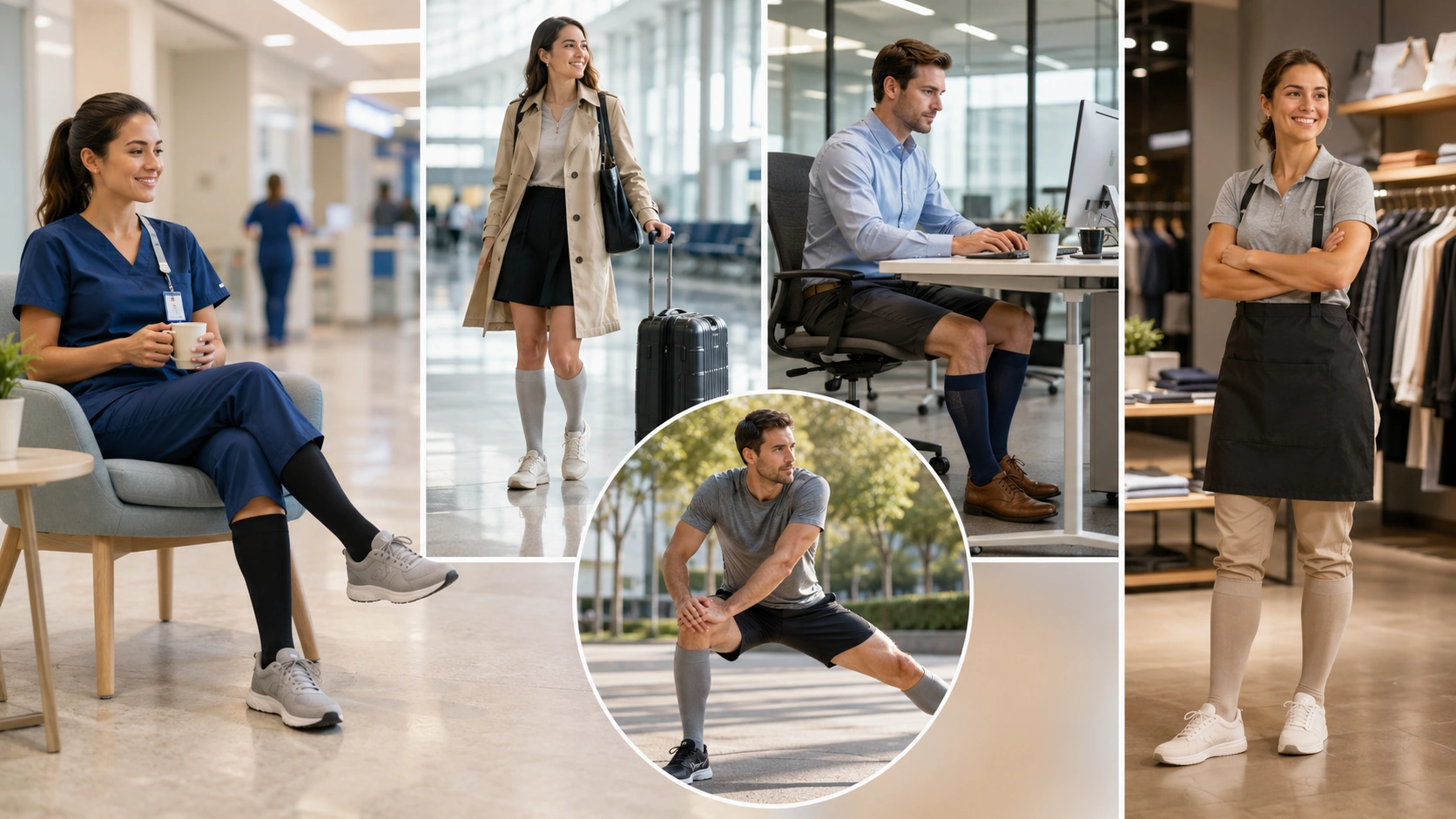
Compression socks are no longer limited to one narrow market. Retailers, distributors, medical supply channels, workwear suppliers, travel brands, and online sellers can position compression socks for a wide range of practical customer needs.
The best product program starts by asking a simple question: who will wear the socks, and why will they buy them? A nurse, a frequent flyer, a runner, and an office worker may all be interested in compression socks, but each group responds to different product language, colors, packaging, and comfort details.
Frequent travelers
Travelers are one of the most familiar customer groups for compression socks. People who take long flights, train rides, bus trips, or road trips often look for supportive socks that feel comfortable during extended sitting and walking through airports or stations.
For travel retail, buyers often prefer compact packaging, neutral colors, easy-to-understand benefits, and clear wearing instructions. Travel compression socks can work well for airport shops, luggage brands, online travel accessories, and giftable wellness kits.
Nurses and healthcare workers
Nurses, doctors, caregivers, dental staff, and other healthcare workers often spend long hours standing and walking. This makes them an important audience for compression sock programs. They usually care about all-day comfort, stay-up cuff performance, easy care, and practical colors that fit workplace uniforms.
For this group, product copy should be direct and useful. Buyers can focus on long-shift comfort, breathable fabric, reinforced heel and toe, and everyday durability. Packaging should avoid exaggerated claims and keep the product benefits clear.
People who stand for long hours
Beyond healthcare, many workers stand for long periods: retail employees, warehouse staff, teachers, restaurant teams, baristas, salon workers, security staff, and event crews. These customers often want socks that feel supportive, stay in place, and handle repeated washing.
Workwear and uniform buyers can position compression socks as a practical add-on product. Solid colors, durable construction, and simple packaging often work well for this group.
Office workers and desk-based professionals
Office workers may sit for many hours during the day. Some customers in this group look for compression socks as part of an everyday comfort or wellness routine. They may prefer products that look less medical and more like normal daily socks.
For office and everyday wellness programs, understated colors, soft materials, and clean packaging are useful. Product photos can show socks in work, commute, and home-office settings to make the category feel approachable.
Runners, gym users, and active customers
Athletes and active consumers may wear compression socks for training, recovery positioning, running, gym sessions, hiking, or team sports. This group often responds to performance colors, breathable materials, secure fit, and dynamic product photography.
Sport-focused products can use more energetic styling than medical or workwear programs. However, comfort and construction still matter. Buyers should keep the product message practical and avoid promising results that the product cannot support.
Pregnancy and maternity retail
Maternity retailers and wellness brands may include compression socks as part of pregnancy comfort product lines. This market often values soft hand feel, easy wearing, gentle support positioning, and calm packaging design.
When selling to pregnancy-related channels, product information should be especially careful and clear. Buyers should use responsible language and encourage customers to follow professional guidance when needed.
Older adults and wellness buyers
Older adults and general wellness customers may look for supportive socks for daily life, travel, walking, and comfort routines. This audience often needs easy-to-read packaging, simple instructions, and product options that are not too difficult to put on.
Retailers serving this market can benefit from readable packaging, simple product instructions, and customer-service support. Neutral colors and classic styles are often suitable.
Online marketplace customers
Marketplace buyers may come from many of the groups above. They often compare products quickly by image, title, reviews, color options, pack count, and product benefits. This means online compression sock listings need strong photos, clear bullet points, and FAQ-style explanations.
For marketplace sellers, multi-pair packs, practical colors, and clear use-case positioning can help customers understand the product faster.
How B2B buyers can use wearer groups
Understanding who should wear compression socks helps buyers choose the right product direction. A travel program may need compact packaging. A nurse program may need work-shift language and durable details. A sport program may need performance styling. An office program may need everyday colors and a less medical look.
Instead of selling one generic compression sock to everyone, strong B2B programs build product lines around clear customer groups. This makes the product easier to explain, easier to photograph, and easier to reorder.